
Let me get straight to the point: there’s only one reason I’m interested in silver.
I’m not interested in silver as money—it’s inferior to gold.
I’m not interested in its industrial applications either.
I’m interested in silver for one reason only: it’s prone to explosive, crisis-driven upside.
Silver is a small market with enormous speculative potential during periods of monetary chaos—like the one we’re now entering in 2026.
Gold, on the other hand, is primarily a monetary metal. As a result, industrial uses account for only a tiny fraction of overall gold demand.
Silver is the opposite. It’s primarily an industrial metal, with monetary use making up only about 16% of total demand.
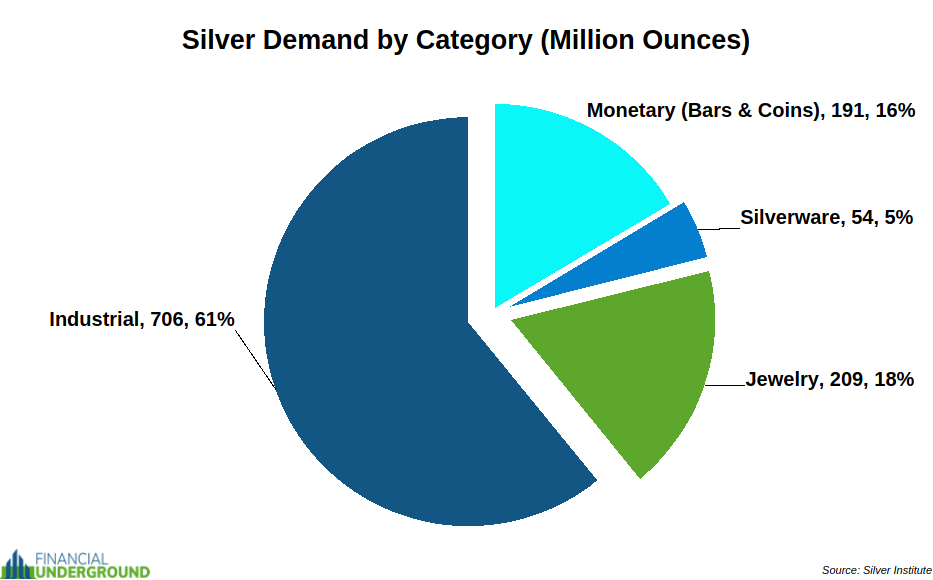
That 16% or so tied to monetary demand is usually insignificant when it comes to driving the price of silver. But during periods of monetary chaos and runaway inflation, people rush into alternative forms of money—assets that hold their value better than rapidly depreciating government paper currencies.
It’s in these moments that silver often sees a stampede of demand. And because the silver market is so tiny—roughly one-tenth the size of the gold market—it doesn’t take much to overwhelm it, triggering sharp price spikes.
I like to think of silver as an industrial metal with a call option on inflation and monetary chaos—something that could arrive sooner than most expect.
Silver’s monetary demand tends to soar during periods of high inflation. As money floods in, the price surges.
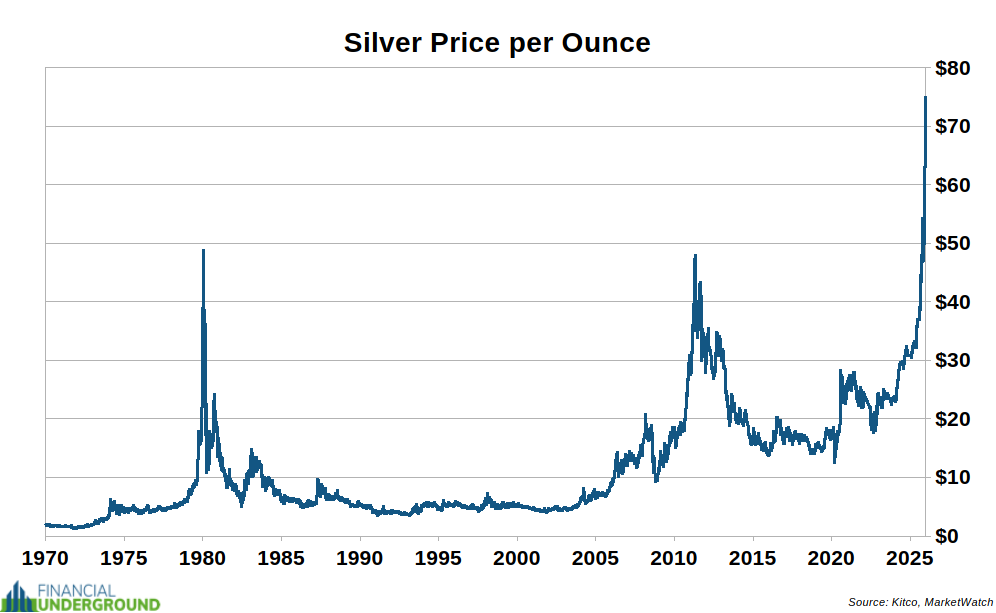
Just look at the story of the Hunt brothers. During the high inflation of the 1970s, they bought as much silver as they could get their hands on. That aggressive accumulation squeezed supply and helped drive silver from around $6 in the late 1970s to nearly $50 by 1980.
Today, the stage is set for another inflationary explosion—likely even more severe than what we saw in the 1970s. It could trigger a crisis-driven silver mania, much like the one that peaked in 1980.
Adjusted for inflation, $50 silver in 1980 would be worth around $208 an ounce today—nearly three times than the current price. Silver mining stocks could deliver even more dramatic gains if we see a similar move today.
Here’s the bottom line.
The stars are aligned for a silver price spike of historic proportions in 2026. The time to get positioned is now.
What to Do Next
Silver may be one of the most explosive ways to profit from a monetary crisis—but it’s only one piece of a much larger picture.
What’s coming in 2026 isn’t just another market cycle. It’s shaping up to be the most dangerous economic crisis in a century, with serious consequences for your wealth, your purchasing power, and your personal freedom.
That’s why I’ve prepared a special report, The Most Dangerous Economic Crisis in 100 Years… the Top 3 Strategies You Need Right Now. Inside, you’ll discover:
- The economic, political, and cultural forces converging right now
- The specific risks ahead—and how they could hit faster than most expect
- The three critical strategies you need in place before the crisis becomes obvious
Silver could surge when chaos hits. But preparation—not panic—is what separates those who merely react from those who come out ahead.
Download the free PDF report here and make sure you’re positioned for what’s coming next.